
Why Bacteria, Not Fish or Equipment, Decide Success in Freshwater, Marine, Brackish & Biotope Aquariums By ProHobby™ | Delhi NCR’s Ecological Systems Authority
🧫 Why Biofilms Matter More Than Any Single Piece of Equipment
Aquarium success is often attributed to:
- Filters
- Lighting
- CO₂
- Substrates
- Media brands
But these are only delivery systems.
“ The true engine of every stable aquarium is the biofilm — a living, microscopic ecosystem coating every surface. “
If biofilms are healthy:
- Ammonia disappears
- Nitrite never spikes
- Fish remain calm
- Plants and corals stabilize
- Algae pressure stays manageable
If biofilms collapse:
- Tanks crash — even with “perfect” equipment
SECTION 1 — What a Biofilm Actually Is
A biofilm is not just bacteria.
It is a structured, multi-layered living matrix made of:
- Nitrifying bacteria (ammonia → nitrite → nitrate)
- Heterotrophic bacteria (organic waste breakdown)
- Archaea (especially in marine systems)
- Fungi and protozoa
- Extracellular polymeric substances (EPS — the glue)
This matrix:
- Anchors microbes to surfaces
- Regulates oxygen diffusion
- Stores nutrients
- Buffers chemical shocks
Biofilms exist on:
- Filter media
- Substrate grains
- Glass
- Driftwood and rock
- Plant roots
- Pipes and hoses
SECTION 2 — Why Free-Floating Bacteria Are Almost Useless
Bacteria only function efficiently when attached.
Free-floating bacteria:
- Are easily removed during water changes
- Lack structural protection
- Cannot form stable metabolic chains
Biofilm-bound bacteria:
- Communicate chemically (quorum sensing)
- Specialize by depth and oxygen availability
- Recover faster after disturbances
This is why “bacteria in a bottle” only works after attachment.
SECTION 3 — Biofilms in Different Aquarium Types
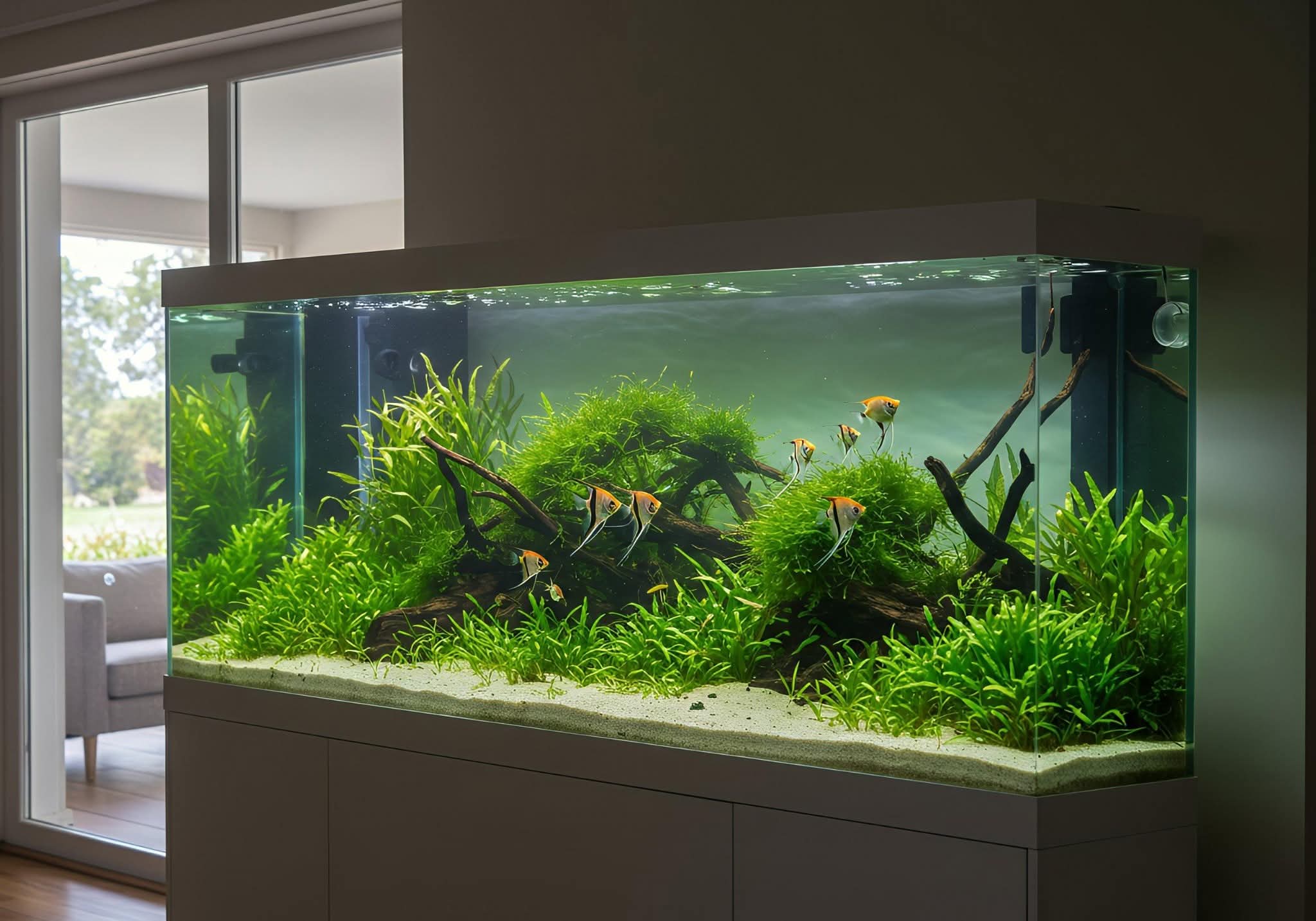
Freshwater
- Dominated by Nitrosomonas & Nitrobacter/Nitrospira
- Sensitive to chlorine, antibiotics, pH crashes
- Easily disrupted by over-cleaning
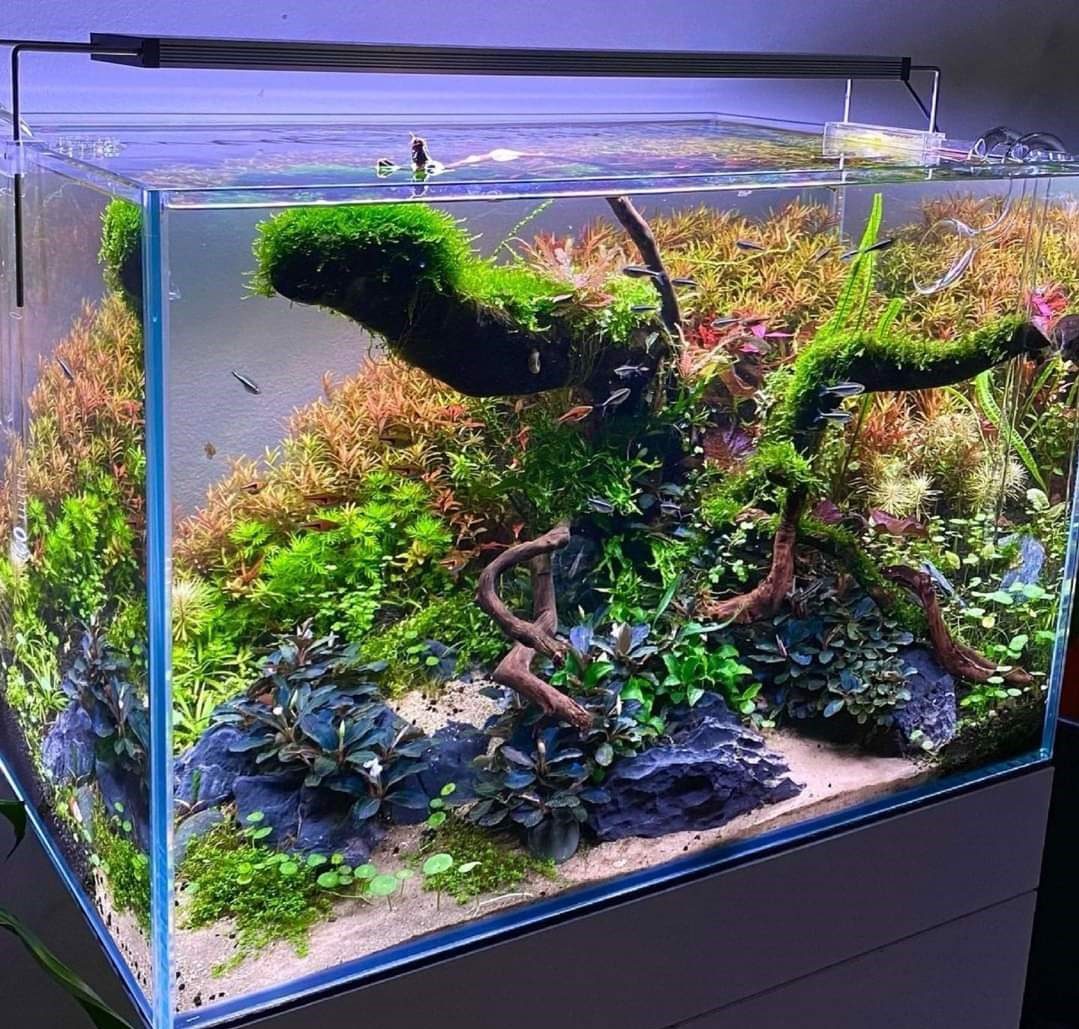
Planted Aquariums
- Biofilms colonize plant roots (rhizosphere) (advanced nutrient & carbon chemistry)
- Interact directly with nutrient uptake
- Compete with algae for nitrogen
Healthy plants = healthy biofilms
Melting plants = ammonia release → biofilm overload
Brackish Aquariums
- Biofilms adapt to fluctuating salinity
- Slower to establish
- Highly sensitive to rapid SG changes
This is why brackish tanks crash easily when rushed. (brackish aquarium setup and salinity management)
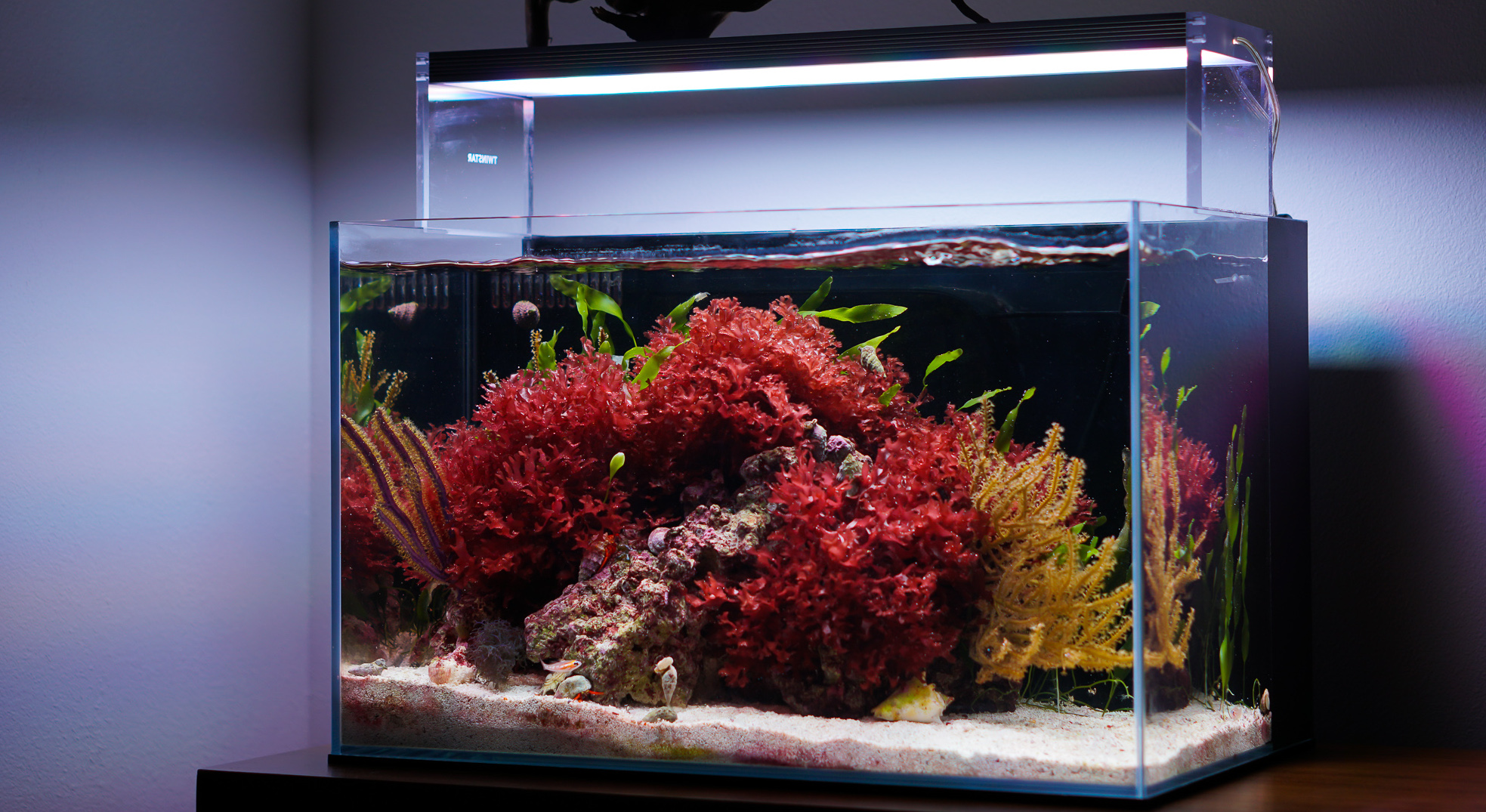
Marine & Reef Systems
- Biofilms include archaea and sulfur-cycling bacteria
- Essential for denitrification zones
- Form the base of coral-microbe symbiosis
Sterilized rock = biologically dead reef. (marine aquarium biological stability)
SECTION 4 — The Biofilm Lifecycle
Phase 1: Surface Colonization
- Initial bacterial attachment
- Weak, easily disturbed
Phase 2: Biofilm Maturation
- EPS matrix forms
- Oxygen gradients establish
- Metabolic specialization begins
Phase 3: Stability
- Shock resistance increases
- Ammonia processing becomes predictable
- Tank enters equilibrium
Phase 4: Disruption or Collapse (unstable water chemistry)
Caused by:
- Antibiotics
- Over-cleaning
- Chlorinated water
- Major chemistry swings
- Media replacement
SECTION 5 — Why “Crystal Clear” Water Can Be Dangerous
Ultra-polished water often indicates:
- Over-filtration
- Excess mechanical removal
- Sterilization via UV/chemicals
This strips suspended nutrients and destabilizes biofilms.
A healthy aquarium is:
- Clear, but not sterile
- Stable, not aggressively “clean”
SECTION 6 — Common Ways Hobbyists Accidentally Kill Biofilms
- Washing filter media under tap water
- Replacing all media at once
- Using antibiotics “just in case”
- Large unbuffered water changes
- Running activated carbon permanently
- Chasing pH aggressively
- Over-cleaning substrates
Each action removes or starves biofilm layers. (why medication without quarantine causes system failure)
SECTION 7 — Biofilms, Algae & the False Enemy Narrative
Algae is not the enemy.
Algae thrives when:
- Biofilms are immature (root causes of recurring algae problems)
- Nutrient processing is incomplete
- Surfaces are uncolonized
Mature biofilms:
- Outcompete algae for nitrogen
- Stabilize phosphate dynamics
- Reduce opportunistic blooms
Killing algae without fixing biofilms guarantees recurrence.
SECTION 8 — Delhi NCR Biofilm Challenges
Local factors: (Delhi NCR water chemistry challenges)
- High chlorine/chloramine levels
- Hard, high-TDS water
- Frequent water changes to “fix problems”
- Temperature swings
These slow biofilm maturation and increase collapse risk.
Solutions:
- Proper dechlorination
- Stable KH buffering
- RO blending where needed
- Gentle maintenance schedules
SECTION 9 — How ProHobby™ Builds Biofilm-Stable Systems
At ProHobby™, we prioritize:
- Biofilm-friendly filtration design
- Staggered media cleaning
- Controlled flow and oxygenation
- Avoidance of unnecessary sterilization
- Quarantine systems that protect biofilms
Our focus is biological stability first, equipment second.
Conclusion — You Don’t Run the Aquarium, the Biofilm Does
Fish are passengers.
Plants are participants.
Equipment is infrastructure.
Biofilms are the operators.
Protect them, and aquariums become:
- Predictable
- Calm
- Resilient
- Long-lived
Ignore them, and no amount of equipment will save the system.
For biofilm-stable aquarium design tailored to Delhi NCR conditions, ProHobby™ offers system-level consultation and setup support.